What is an AI Video Generator?
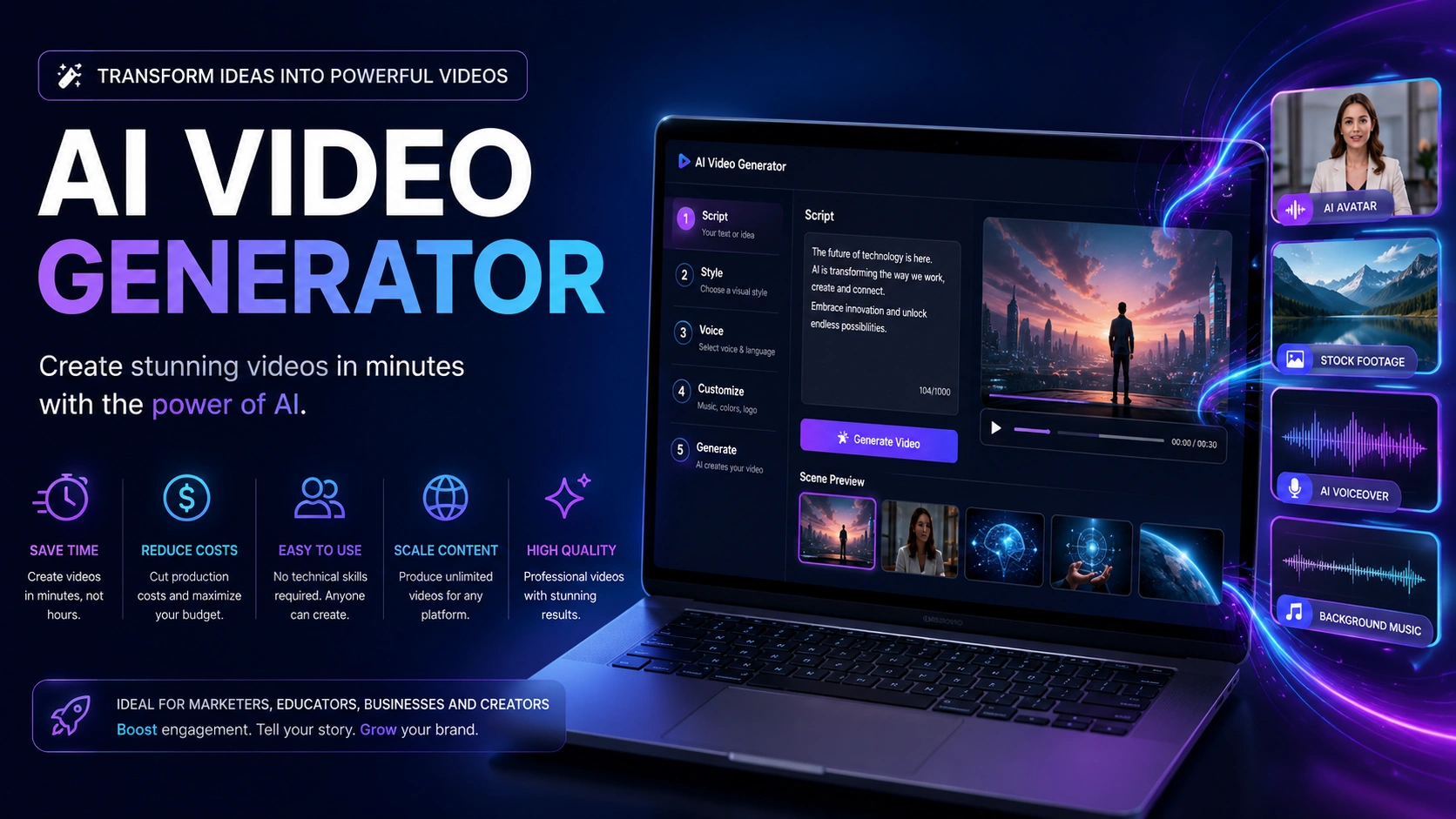
In today’s fast-evolving digital landscape, content is king, and video is its most powerful scepter. From viral social media clips to comprehensive corporate training modules, video dominates online engagement. However, traditional video production can be a daunting, resource-intensive endeavor. This is where the revolutionary technology of an AI video generator steps in, transforming the way we conceive, create, and distribute visual stories. These innovative tools are not just a futuristic concept; they are here now, democratizing video creation and empowering individuals and businesses alike to produce high-quality, engaging video content with unprecedented ease and speed.
Imagine transforming a simple text prompt into a dynamic, visually rich video in minutes, complete with narration, music, and animation. This is the promise and reality of AI video generators, pushing the boundaries of creativity and efficiency. Whether you’re a marketer looking to produce captivating ad campaigns, an educator crafting engaging e-learning materials, or a content creator aiming to streamline your workflow, understanding the capabilities and potential of an AI video generator is no longer optional—it’s essential for staying ahead in the digital race.
00:00:12 — PREVIEW
See this exact workflow rendered in real time
Skip the manual editing. Lumivids turns a script, image, or idea into a finished video in minutes.
Try it freeWhat is an AI Video Generator?
At its core, an AI video generator is a software application that leverages artificial intelligence, machine learning, and deep learning algorithms to produce video content from various inputs. Unlike traditional video editing software that requires manual manipulation of footage, effects, and timelines, AI video generators automate significant portions of the creation process. They can interpret text scripts, static images, or even basic audio files and translate them into dynamic, animated videos, complete with avatars, voiceovers, background music, and scene transitions.
The fundamental idea is to empower users to create professional-looking videos without needing extensive technical skills, expensive equipment, or a large production team. These tools act as virtual producers, animators, and editors, all rolled into one intelligent package. For a deeper dive into these core modalities, you can explore the distinctions between Text to Video vs Image to Video, which highlights the different input methods these generators utilize.
The Core Mechanisms Behind AI Video Generation
Understanding how an AI video generator functions provides insight into its incredible power. These systems are built upon a sophisticated interplay of several advanced AI technologies:
Natural Language Processing (NLP)
For text-to-video generation, NLP is crucial. It enables the AI to understand the nuances, context, and intent behind written scripts. This allows the generator to select appropriate visuals, gestures for avatars, and even emotional inflections for voiceovers that align with the text.
Generative Adversarial Networks (GANs) and Diffusion Models
These are the engines that power the visual creation aspect.
- GANs consist of two neural networks, a generator and a discriminator, that compete against each other. The generator creates new images or video frames, and the discriminator tries to determine if they are real or fake. This adversarial process helps the generator produce increasingly realistic and high-quality visuals.
- Diffusion Models, more recently, have gained prominence for their ability to generate highly detailed and coherent images and video frames from noise, guided by text prompts. They excel at producing photorealistic and stylistically diverse content.
Computer Vision
When an AI video generator uses existing images or footage as input, computer vision algorithms come into play. They analyze the content, identify objects, faces, and scenes, and understand their spatial relationships, enabling the AI to animate them realistically or integrate them seamlessly into new video sequences.
Speech Synthesis (Text-to-Speech)
To provide voiceovers, AI video generators incorporate advanced text-to-speech (TTS) technology. This allows them to convert written text into natural-sounding speech in various languages, accents, and emotional tones. Many advanced generators also offer voice cloning, enabling users to create a unique AI voice from a small audio sample.
Motion Synthesis and Animation
This mechanism focuses on creating realistic movement for characters, objects, and camera perspectives. From subtle facial expressions of an AI avatar to complex scene transitions, motion synthesis ensures that the generated video is fluid, engaging, and visually appealing.
Benefits of Using an AI Video Generator
The adoption of an AI video generator offers a multitude of advantages that can revolutionize content creation workflows across various sectors:
Time Efficiency
One of the most significant benefits is the drastic reduction in production time. What used to take days or weeks for scripting, shooting, editing, and post-production can now be accomplished in hours, or even minutes, by an AI video generator. This speed allows for rapid iteration and quicker market responsiveness.
Cost Reduction
Traditional video production involves substantial costs: equipment, studio rentals, actors, film crew, editors, and more. An AI video generator significantly lowers these overheads, making high-quality video creation accessible even to small businesses and individual creators with limited budgets.
Accessibility and Democratization
AI video generation breaks down technical barriers. You don’t need to be a professional videographer or editor to create compelling videos. The intuitive interfaces and automated processes make sophisticated video creation accessible to anyone with an idea and a text prompt.
Scalability of Content Production
Businesses often need to produce a high volume of personalized or niche videos, which is impractical with traditional methods. An AI video generator can churn out numerous variations of videos, tailored for different audiences or platforms, with minimal additional effort, allowing for unprecedented content scalability.
Enhanced Creativity and Experimentation
With the mundane tasks automated, creators can focus more on conceptualization and storytelling. AI tools allow for quick experimentation with different styles, narratives, and visual approaches, fostering innovation without the fear of wasting significant resources on failed experiments.
Brand Consistency
For businesses, maintaining a consistent brand image across all content is crucial. AI video generators can be trained with specific brand guidelines, ensuring that all generated videos adhere to established colors, fonts, logos, and stylistic elements.
Key Features to Look for in an AI Video Generator
When selecting the right AI video generator, consider these essential features to ensure it meets your specific needs:
- Text-to-Video Capabilities: Evaluate the accuracy of its understanding of prompts and the range of visual styles it can generate. Can it handle complex narratives or simply create basic clips?
- Customization Options: Look for generators that offer a wide array of customizable avatars (realistic vs. animated), voice styles, background templates, and branding elements. The more control you have over the output, the better.
- Integration with Other Tools: Seamless integration with other marketing platforms, project management tools, or content management systems can greatly enhance workflow efficiency.
- Ease of Use: An intuitive, user-friendly interface is paramount. You want a tool that allows you to jump in and start creating without a steep learning curve.
- Output Quality and Resolution: Assess the realism, clarity, and overall professional look of the generated videos. Check if it supports high-definition or even 4K resolution.
- Multilingual Support: If your target audience is global, a generator that supports multiple languages for both text input and voiceovers is invaluable.
- Collaboration Features: For teams, features like shared workspaces, revision tracking, and comment functions can streamline the production process.
Transforming Industries: Use Cases for AI Video Generators
The applications of an AI video generator are vast and continually expanding, disrupting various industries:
Marketing & Advertising
Marketers can rapidly create diverse explainer videos, product demonstrations, social media ads, and personalized video campaigns. This enables A/B testing of various ad creatives quickly and efficiently. Just as AI has revolutionized image creation from text prompts, producing stunning visuals in minutes, AI video generators are now extending this ease to moving pictures, enabling marketers to craft compelling visual stories at scale. You can even generate incredible images from simple text prompts, as detailed in our guide on How to Create Images From Text Prompts in Minutes.
E-learning & Training
Educational institutions and corporate training departments can generate engaging course content, tutorials, and onboarding videos with animated avatars and clear voiceovers, making learning more dynamic and accessible.
Content Creation
Influencers, YouTubers, and bloggers can use AI video generators to produce regular content, such as news summaries, reviews, or lifestyle vlogs, without the heavy burden of manual filming and editing. This is particularly useful for platforms like TikTok, where rapid content cycles are essential.
News & Media
Journalism can leverage AI to create automated news reports, weather forecasts, or personalized video summaries for subscribers, increasing the speed and volume of content delivery.
Product Demos & Reviews
E-commerce businesses can generate concise, informative video demonstrations for every product, enhancing customer engagement and reducing returns by providing clearer visual information.
Challenges and Considerations
While the potential of an AI video generator is immense, it’s important to acknowledge the challenges and ethical considerations:
- Ethical Concerns: The rise of deepfakes and the potential for misinformation is a serious concern. Responsible use and robust detection mechanisms are crucial.
- Quality vs. Human Touch: While AI is rapidly improving, it may still struggle with the subtle nuances, emotional depth, and spontaneous creativity that a human filmmaker brings. The human touch remains invaluable for highly artistic or sensitive projects.
- Data Bias: AI models are trained on vast datasets, which can sometimes contain biases. These biases can inadvertently be reflected in the generated content, leading to stereotypes or unfair representations.
- Copyright & Ownership: The legal landscape around AI-generated content is still evolving. Questions of copyright ownership for content created by an AI video generator need clearer definitions.
- Computational Resources: High-quality video generation can be computationally intensive, requiring significant processing power, which can impact speed and cost for providers.
The Future of AI Video Generation
The trajectory of an AI video generator points towards an incredibly dynamic future. We can anticipate:
- Hyper-realism and Emotional Intelligence: Future AI will produce even more photorealistic human avatars capable of conveying a wider range of genuine emotions and subtle expressions.
- Greater Customization and Control: Users will have finer-grained control over every aspect of video generation, from camera angles and lighting to character personalities and narrative arcs.
- Integration with AR/VR: Seamless integration with Augmented Reality and Virtual Reality environments will enable the creation of immersive, interactive video experiences.
- Real-time Video Generation: Imagine generating live, dynamic video streams or interactive narratives on the fly, responding to user input or real-world events.
- Sophisticated Storytelling: AI will move beyond simple script-to-video, assisting with complex narrative structures, character development, and genre-specific storytelling.
Choosing the Right AI Video Generator for Your Needs
With so many options emerging, selecting the optimal AI video generator requires careful consideration:
- Define Your Goals: What kind of videos do you need to create? For what purpose (marketing, education, entertainment)?
- Consider Your Budget: AI tools range from free basic versions to premium enterprise solutions. Determine what you’re willing to invest.
- Evaluate Features: Compare the specific features offered by different generators against your defined needs. Prioritize customization, output quality, and ease of use.
- Test and Review: Take advantage of free trials. Generate a few test videos to assess the quality and user experience firsthand. Read user reviews and case studies.
- Look for Scalability: Choose a platform that can grow with your needs, offering features and plans that accommodate increasing video production demands.
Conclusion
The AI video generator represents a paradigm shift in content creation, offering unparalleled efficiency, accessibility, and creative freedom. While challenges and ethical considerations remain, the rapid advancements in AI technology are continually pushing the boundaries of what’s possible. These tools are empowering a new generation of creators, marketers, and educators to tell their stories more effectively and at a scale previously unimaginable. Embracing the power of AI video generation is not just about adopting a new tool; it’s about unlocking a future where compelling visual content is within everyone’s reach, transforming industries and reshaping the digital landscape one pixel at a time. The future of video is intelligent, automated, and incredibly exciting.
FAQ
Q1: What is the primary benefit of using an AI video generator?
A1: The primary benefit is significantly increased efficiency and cost reduction in video production. AI video generators can create high-quality videos in a fraction of the time and cost compared to traditional methods, making professional video content accessible to a wider audience.
Q2: How do AI video generators differ from traditional video editing software?
A2: Traditional video editing software requires manual input of footage, effects, and extensive editing by a human. An AI video generator automates much of this process, using AI algorithms to generate visual content, voiceovers, and animations from text prompts or other basic inputs, requiring less manual effort and technical skill.
Q3: Can AI video generators create realistic human characters?
A3: Yes, many advanced AI video generators are capable of creating highly realistic human-like avatars with a range of emotions, gestures, and voices. The technology is continuously improving, making these AI-generated characters almost indistinguishable from real humans in some contexts.
Q4: Are AI-generated videos truly original, or do they reuse existing content?
A4: AI-generated videos are typically “original” in the sense that the AI synthesizes new visuals, sounds, and animations based on its training data and your specific prompts. While the AI learns from vast existing datasets, it doesn’t usually “copy-paste” existing content but rather generates unique compositions, much like an artist creates new work inspired by their experiences.
Q5: What input types can an AI video generator typically accept?
A5: Most AI video generators can accept various inputs, including text scripts (for text-to-video), static images (for image-to-video), audio files (for voiceovers or animation synchronization), and sometimes even basic outlines or bullet points. This flexibility allows users to start with different forms of content and transform them into videos.
RENDER COMPLETE
Ready to make your own?
Join the creators already producing video at a scale traditional production can’t match.





Post Comment