What Is an AI Image Generator and How Does It Work?
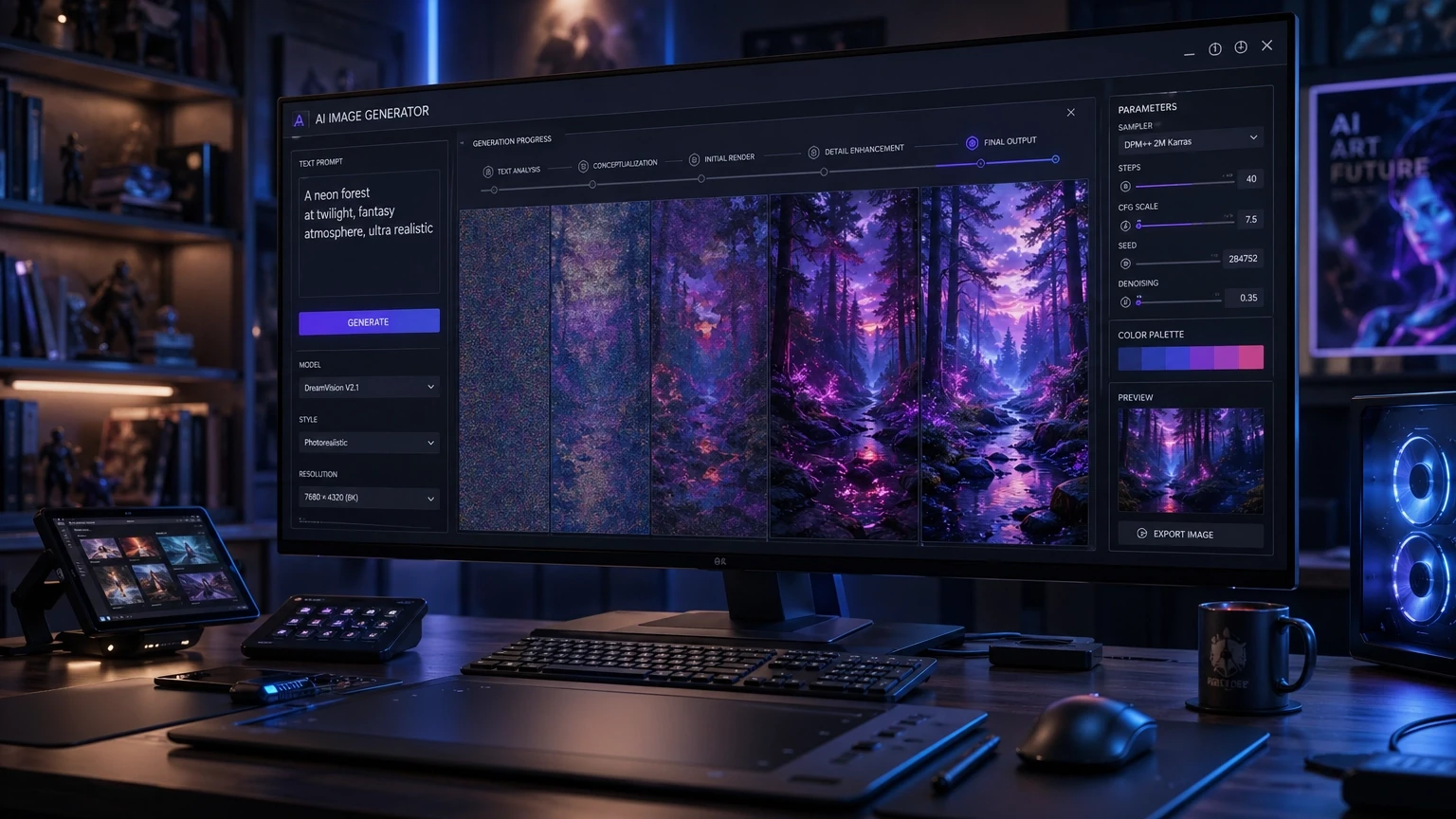
The realm of artificial intelligence has rapidly expanded, bringing forth innovations that were once confined to the pages of science fiction. Among these, AI image generators stand out as a revolutionary technology, capable of transforming textual descriptions or existing images into entirely new visual content. These sophisticated tools leverage advanced machine learning models to understand prompts and synthesize corresponding visuals, opening up unprecedented possibilities for creativity, design, and content creation. This article delves into the fundamental concepts behind AI image generators, exploring their operational mechanisms, with a particular focus on the distinct yet complementary processes of Text to image and image to image generation.
At its core, an AI image generator is a computer program that uses artificial intelligence to produce images. Unlike traditional graphic design software, which requires manual input and artistic skill, AI image generators can create visuals autonomously based on given instructions. These instructions can range from simple text descriptions, such as “a cat wearing a top hat riding a bicycle,” to more complex inputs like an existing image that needs modification or stylistic transformation.
The Underlying Technology: Generative AI
The magic behind AI image generation lies in generative artificial intelligence. Generative AI refers to a class of AI models designed to create new content, rather than merely analyzing or classifying existing data. In the context of images, these models learn patterns, styles, and features from vast datasets of existing images and their associated descriptions. By understanding these relationships, they can then generate novel images that adhere to the learned characteristics and the specific input provided by the user.
Key to this process are neural networks, particularly deep learning architectures. These networks are trained on millions, sometimes billions, of image-text pairs, allowing them to develop a nuanced understanding of how different words and concepts translate into visual elements. The training process involves feeding the model diverse data, enabling it to recognize objects, scenes, artistic styles, and even abstract concepts.
Text to image Generation: From Words to Visuals
Text to image (T2I) generation is perhaps the most captivating application of AI image generators. It allows users to describe an image using natural language, and the AI model then interprets this description to synthesize a corresponding visual output. Popular examples include DALL-E, Stable Diffusion, and Midjourney.
How Text to image Works
The process of Text to image generation typically involves several intricate steps, often leveraging diffusion models. Diffusion models work by taking a noisy image and iteratively refining it to remove noise, guided by the text prompt. Here’s a simplified breakdown:
1.Text Encoding: The initial step involves converting the textual prompt into a numerical representation that the AI model can understand. This is usually done using a text encoder, often a large language model (LLM) like CLIP (Contrastive Language-Image Pre-training) . The text encoder analyzes the prompt and extracts its semantic meaning, creating an embedding that captures the essence of the description.
2.Noise Injection: The generation process often starts with a canvas of pure noise, similar to static on an old television screen. This seemingly random starting point is crucial for the generative capabilities of diffusion models.
3.Iterative Denoising (Diffusion Process): The core of Text to image generation involves a series of denoising steps. The AI model, trained on countless examples of images and their corresponding text, learns how to gradually transform the noisy image into a coherent visual that matches the text embedding. In each step, the model predicts and removes a small amount of noise, guided by the semantic information from the text prompt. This iterative process continues until a clear and detailed image emerges.
4.Image Decoding: Finally, the denoised numerical representation is converted back into a visual image that humans can perceive. This step often involves a decoder component that reconstructs the high-resolution image from the latent representation.
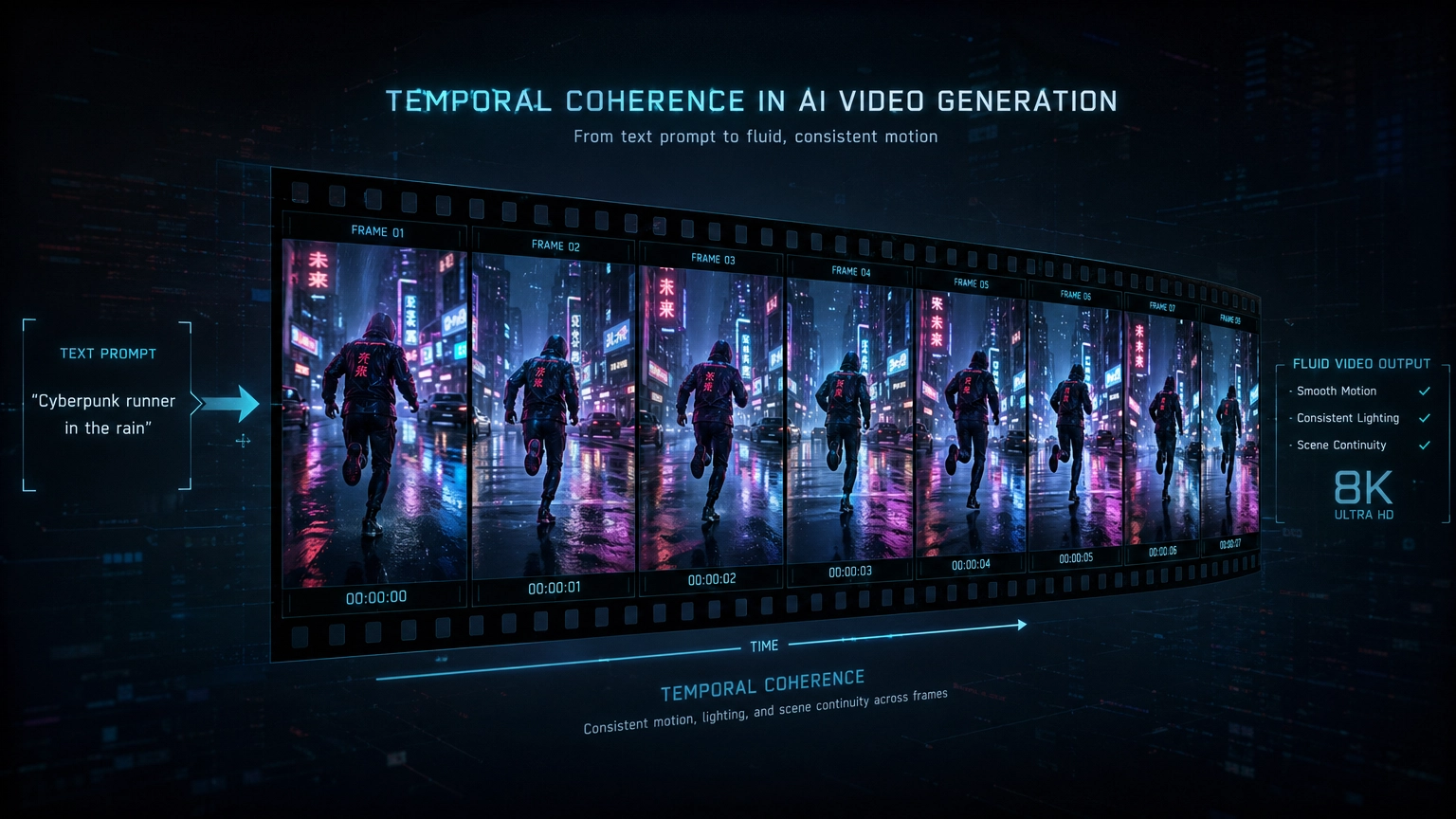
Key Components and Concepts
•Latent Space: During the denoising process, images are often represented in a latent space, a compressed representation that captures the essential features of the image more efficiently than pixel data. This allows the model to manipulate and generate images at a higher conceptual level.
•Attention Mechanisms: Many Text to image models incorporate attention mechanisms, which allow the model to focus on specific parts of the text prompt when generating corresponding parts of the image. For example, if the prompt mentions “a red car,” the attention mechanism ensures that the model prioritizes generating a red object in the image.
Image to image Generation: Transforming Existing Visuals
While Text to image focuses on creating visuals from scratch, image to image (I2I) generation takes an existing image as input and transforms it based on a given prompt or desired style. This technique is incredibly versatile, enabling tasks like style transfer, image editing, and generating variations of an existing picture.
How image to image Works
image to image generation often utilizes similar underlying technologies to Text to image, but with a crucial difference: the initial input is an image rather than just text. Here’s a general overview:
1.Image Encoding: The input image is first processed by an image encoder (e.g., a Convolutional Neural Network or Vision Transformer) that extracts its key features and converts them into a numerical representation, similar to how text is encoded in T2I. This representation captures the content, structure, and style of the original image.
2.Prompt Integration (Optional): Depending on the specific application, a text prompt can also be incorporated to guide the transformation. For instance, a prompt like “turn this into a watercolor painting” would influence the stylistic output.
3.Generative Transformation: The encoded image (and optionally the text prompt) is then fed into a generative model, often a diffusion model or a Generative Adversarial Network (GAN) . This model learns to modify the input image’s features based on the desired output. For diffusion models, this might involve adding noise to the input image and then denoising it while guiding the process with the original image’s features and the text prompt.
4.Image Decoding: Finally, the transformed numerical representation is decoded back into a new image, reflecting the desired changes.
Key Applications of image to image
•Style Transfer: Applying the artistic style of one image to the content of another. For example, turning a photograph into a painting in the style of Van Gogh.
•Image Editing and Manipulation: Changing specific elements within an image, such as altering colors, adding objects, or modifying facial expressions, guided by text prompts.
•Image Upscaling and Restoration: Enhancing the resolution of low-quality images or restoring damaged photographs.
•Variations Generation: Creating multiple stylistic or compositional variations of an original image, allowing artists and designers to explore different creative directions.
The Synergy of Text to image and image to image
While distinct, Text to image and image to image technologies often complement each other. A common workflow might involve using Text to image to generate an initial concept, and then refining and iterating on that concept using image to image techniques. This combined approach offers unparalleled flexibility and control over the creative process.
Challenges and Future Directions
Despite their impressive capabilities, AI image generators face several challenges:
•Bias in Training Data: Models trained on biased datasets can perpetuate and amplify those biases in the generated images, leading to issues of representation and fairness.
•Ethical Concerns: The ability to generate realistic fake images raises concerns about misinformation, deepfakes, and copyright infringement.
•Computational Resources: Training and running these models require significant computational power, making them resource-intensive.
•Controllability and Specificity: While prompts guide generation, achieving precise control over every detail of the output can still be challenging.
Future directions in AI image generation include developing more robust methods for bias mitigation, enhancing user control and interpretability, reducing computational demands, and exploring novel architectures that can generate even more coherent and contextually aware images. The integration of 3D generation and video generation capabilities is also a rapidly evolving area.
Conclusion
AI image generators, powered by sophisticated generative AI models, have revolutionized how we create and interact with visual content. Text to image and image to image technologies, though distinct in their primary input, both offer powerful tools for artists, designers, marketers, and anyone looking to unlock new creative possibilities. As these technologies continue to evolve, they promise to further blur the lines between human imagination and artificial creation, ushering in an era of unprecedented visual innovation.
References
RENDER COMPLETE
Ready to make your own?
Join the creators already producing video at a scale traditional production can’t match.

Post Comment