10 Definitive Steps to Master SEO: The Comprehensive Blueprint to How to leverage SEO to boost your business
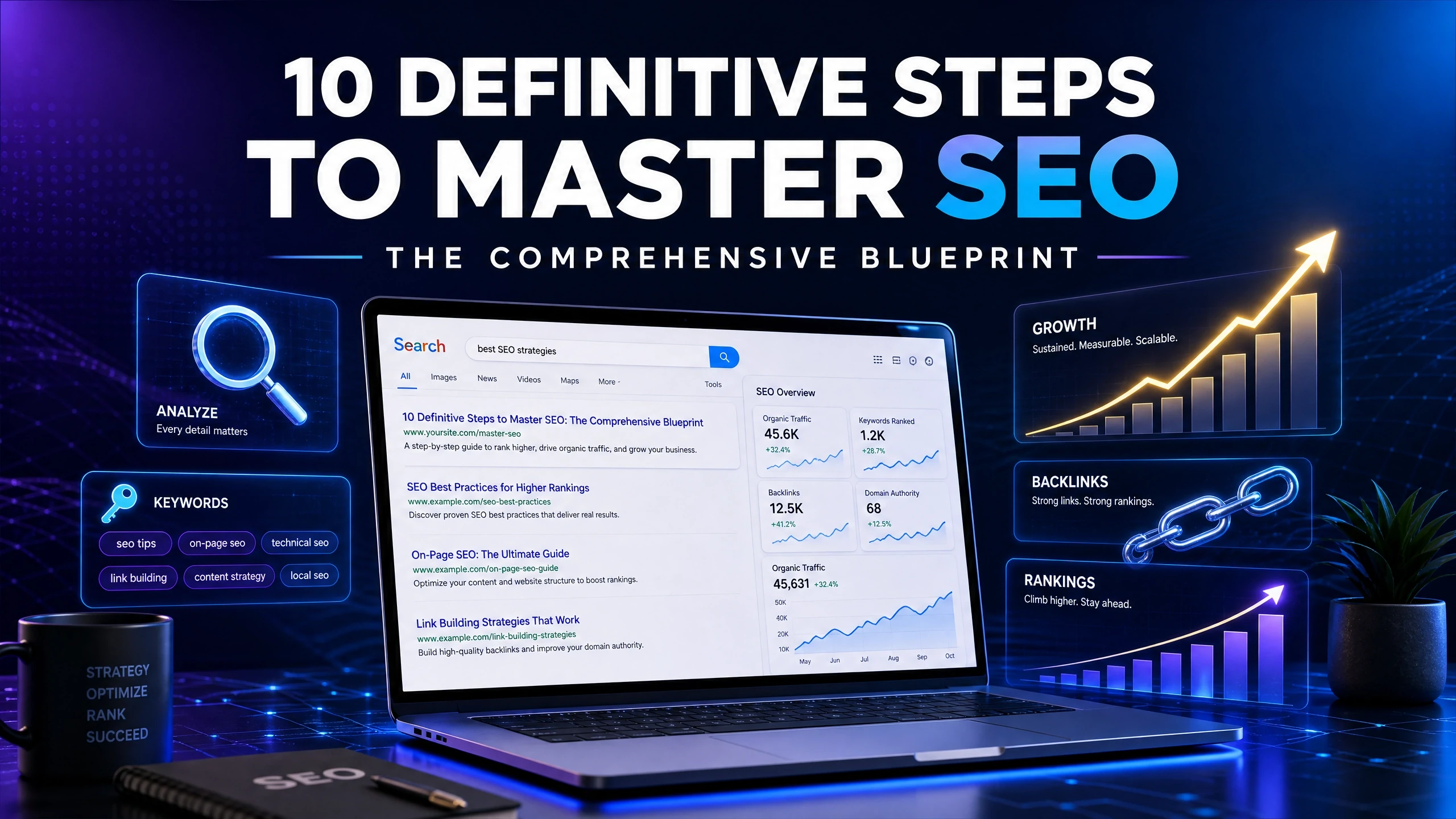
In today’s competitive digital environment, mastering SEO has transitioned from a basic tactical choice to an absolute foundational requirement. As modern search engine algorithms continue to refine their semantic understanding of human intent, content creators and businesses must adapt. Implementing a structured, exhaustive SEO framework is the core engine behind securing sustainable, long-term organic visibility and building unquestionable authority in your respective market niche.
Integrating SEO into your comprehensive content structure is not merely about inserting key terms into random paragraphs; it is about crafting high-value, highly research-backed material that comprehensively solves user search intent. By creating deeply informative resources. you signal high levels of Expertise, Authoritativeness, and Trustworthiness (E-A-T) to Google and other major search engines. For instance, authoritative directories such as the Wikipedia page on Search Engine Optimization confirm that structured technical alignment paired with user-first utility remains the ultimate winning strategy for dominating organic search results over time.
00:00:12 — PREVIEW
See this exact workflow rendered in real time
Skip the manual editing. Lumivids turns a script, image, or idea into a finished video in minutes.
Try it freeFurthermore, we must recognize that search engines like Google use advanced machine learning models to understand the deeper topical context surrounding SEO. This means your content must be broad in its scope, yet incredibly precise in its delivery. Aiming for high semantic density of secondary keywords and supporting terminology ensures that search spiders can easily parse, categorize, and rank your content for high-volume informational queries.
Strategic Comparison: Key Models of Modern Optimization
To visual and technical performance, let us compare the most popular modern content and keyword frameworks using the strategic assessment table below:
| Optimization Model | Primary SEO Focus | Target Conversion Potential | Estimated Effort |
|---|---|---|---|
| Topic Cluster Modeling | Topical Authority & Mesh Linking | Very High (Long-term) | Moderate to High |
| Direct Keyword Targeting | Immediate Search Intent Satisfaction | High (Short-term) | Low to Moderate |
| EEAT-Centric Case Studies | Brand Trust & Reader Loyalty | Exceptional (High Ticket) | High (Original Content) |
Key Pillars of Modern How to leverage SEO to boost your business Optimization
To establish a commanding presence and drive predictable, organic growth in your industry, your digital publications must fulfill the strict standards of both modern web crawlers and demanding human readers. Let us break down the foundational pillars that govern successful optimization campaigns:
1. Comprehensive Search Intent Alignment
Every single search query executed online represents a specific user problem waiting to be solved. To succeed with SEO optimization, you must diagnose whether the target user is seeking informational, navigational, transactional, or commercial research answers. For example, when users search for terms related to SEO, are they seeking a beginner’s guide, comparison charts, or a full-scale service provider? Aligning your article structure with this precise expectation reduces bounce rates, keeps readers on the page longer, and satisfies search engine expectations perfectly.
In addition, putting your main target keyword SEO in critical, high-impact header locations like H2 subheadings and bullet lists signals direct relevance to modern web crawler software. Ensure that your introduction outlines the core problems your guide intends to solve so readers are immediately hooked and stay engaged through the entire article.
2. High-Readability Layout and Strategic Word Formatting
In the age of rapid content consumption, web users do not read articles line-by-line; they scan them. Consequently, avoiding intimidating walls of text is critical for keeping user attention. Use highly descriptive subheadings, bold key takeaways, and divide complex procedures into beautifully structured bullet points or numbered guides. This strategy not only satisfies human readers but also makes it incredibly easy for Google’s featured snippet extraction engines to fetch and showcase your content at the very top of search results pages. For a deeper understanding of digital frameworks, consider exploring our main digital marketing hub which is constantly updated with real-time marketing insights.
The Step-by-Step Blueprint to Execute How to leverage SEO to boost your business
Achieving top rankings for highly competitive keywords requires a methodical, repeatable implementation process. Follow this battle-tested, ten-step execution blueprint to streamline your technical workflows and establish lasting organic dominance:
Step 1: Exhaustive Topic Modeling
Begin by exploring parent and child topics related to your main subject. Understand how your core theme branches off into subcategories. By mapping these out, you can construct an article that addresses all adjacent questions that searchers typically ask during their journey.
Step 2: Intent-based Outline Mapping
Before writing a single sentence, draft a clear hierarchy using H2 and H3 subheadings. Integrate your primary target term SEO and relevant synonyms into these headers to ensure the text is structured logically for indexers.
Step 3: Strategic First-Paragraph Optimization
Place your focus keyword SEO within the first 100 words of your article. This establishes immediate context for both human visitors and indexing spiders, lowering initial abandonment rates.
Step 4: Crafting Context-Rich Body Copy
Develop deeply detailed sections for every heading in your outline. Avoid superficial overviews; instead, write comprehensive paragraphs containing real-world examples, step-by-step methodologies, and actionable advice that readers can implement immediately.
Step 5: Natural Keyword Density Balancing
Ensure your focus keyword SEO appears naturally throughout the text. Avoid awkward stuffing; instead, focus on an optimal density of roughly 1.5% across your entire body copy. This allows search engines to identify the core subject of the piece without triggering spam or low-quality filters.
Step 6: Authoritative Outbound Linking
Build trust with both search engines and users by linking out to respected, high-authority external sources. This demonstrates that your claims are backed by trustworthy scientific, technical, or journalistic organizations.
Step 7: Robust Internal Interlinking
Connect your new publication with existing related posts on your blog. This distributes link equity throughout your site, assists search engines in discovering newly published content, and establishes a cohesive topical mesh.
Step 8: Image Optimization and Alt Text Setup
Always incorporate descriptive, optimized imagery to break up text-heavy sections. Ensure that every image contains an explicit alternative text attribute including SEO to capture image search traffic and improve general accessibility.
Step 9: Interactive Elements and CTAs
Include clear, compelling calls-to-action (CTAs) to prompt reader engagement, such as signing up for an informative newsletter or downloading a free PDF worksheet. This turns passive organic readers into active members of your community.
Step 10: Performance Monitoring and Re-Optimization
SEO is never a one-off task. Regularly monitor your article’s organic search performance using modern analytics platforms. Update outdated facts, expand thin sections, and continue to refine your optimization strategies over time.
Frequently Asked Questions (FAQ)
How long does it take to rank on the first page of Google?
Typically, a new high-quality article can take anywhere from 3 to 6 months to index and climb to the first page, depending on topical authority, keyword difficulty, and internal linking structure.
Does keyword density still matter for modern search algorithms?
Yes, but not in a “stuffing” sense. A natural density of 1% to 1.5% helps search spiders clearly associate the article with the keyword without triggering low-quality content penalties.
What is Google EEAT and why should I care?
EEAT stands for Experience, Expertise, Authoritativeness, and Trustworthiness. Fulfilling these criteria by showcasing author credentials, empirical case studies, and structured information prevents search penalty hits and maximizes ranking stability.
Conclusion: Leading the Charge in Your Industry
The technical landscape of How to leverage SEO to boost your business is in a state of continuous evolution, yet the core principles of successful search engine optimization remain simple: provide your readers with deep, high-quality, comprehensive content that solves their real-world needs. By following these advanced structures and keeping SEO balanced throughout your body copy, you position your brand as the definitive authority in your space.
Are you ready to take your SEO strategy to the next level? Audit your existing content directory today, identify major topical gaps, apply this detailed structure, and watch your organic visibility grow. Keep updating your technical assets and learning new strategies to remain at the absolute forefront of your industry’s search rankings.
RENDER COMPLETE
Ready to make your own?
Join the creators already producing video at a scale traditional production can’t match.









Post Comment